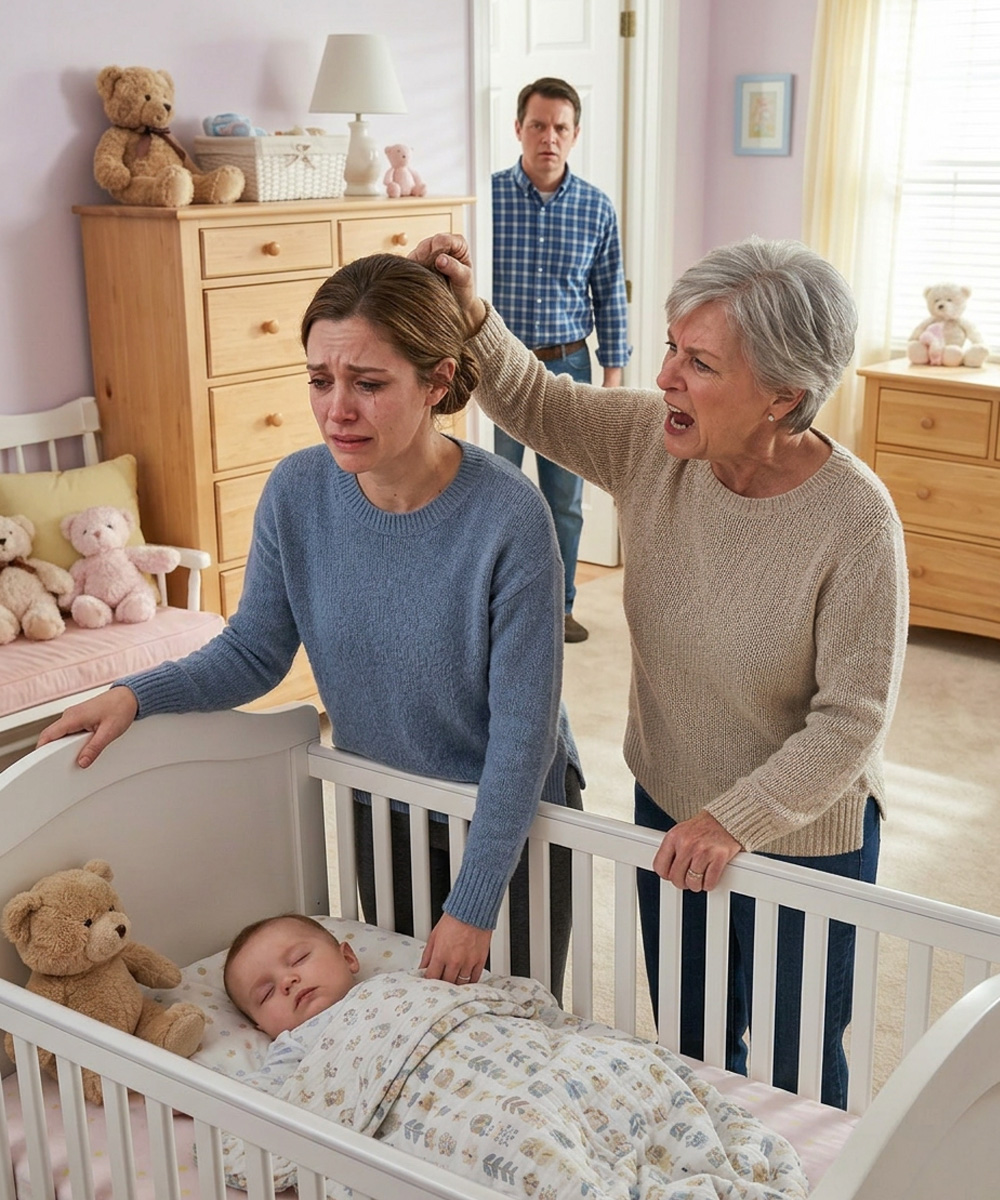
Ho installato la telecamera per tenere d’occhio il mio bambino durante i suoi pisolini pomeridiani. Era proprio questa l’idea. Mia moglie, Lily, era esausta dopo il parto e nostro figlio, Noah, aveva iniziato a svegliarsi piangendo in modi che non riuscivamo a spiegarci. Ho pensato che forse il baby monitor nella sua stanza ci avrebbe aiutato a capire i suoi ritmi del sonno. Forse si svegliava di soprassalto. Forse in casa c’era più rumore di quanto pensassimo. Forse avrei potuto fare qualcosa di utile pur lavorando tante ore e non essendo abbastanza a casa.
Invece, alle 13:42 di mercoledì, ho aperto il feed dal mio ufficio e ho sentito mia madre dire: “Vivi alle spalle di mio figlio e osi ancora dire di essere stanco?”.
Poi ha afferrato mia moglie per i capelli.
È successo proprio accanto alla culla di Noah.
Lily aveva una mano sullo scaldabiberon e l’altra sulla sponda della culla, probabilmente per non svegliarlo. Mia madre, Denise, era in piedi dietro di lei nella cameretta con quella postura rigida che preannunciava sempre guai, anche se per anni l’avevo chiamata “opinioni forti”. Lily ha detto qualcosa a voce troppo bassa perché la telecamera potesse captarla. Mia madre si è avvicinata, ha sibilato quella frase e poi ha afferrato una manciata di capelli di Lily così velocemente che mia moglie ha sussultato invece di urlare.
Quello è stato il momento che mi ha spezzato. Lei non ha urlato.
Lei rimase immobile.
Le sue spalle si irrigidirono. Il mento si abbassò. Il suo corpo smise di opporre resistenza, come si fa quando la resistenza ha fallito troppe volte. E in quel terribile silenzio, capii qualcosa: il suo silenzio di questi ultimi mesi non era pazienza, non erano sbalzi d’umore post-parto, non era “un tentativo di mantenere la pace”.
Era paura.
Mi chiamo Evan Brooks. Ho trentatré anni, lavoro nel settore delle vendite di software e fino a quel pomeriggio pensavo di star facendo del mio meglio sotto pressione. Mia madre si era trasferita temporaneamente da noi dopo il cesareo di Lily perché insisteva sul fatto che le neomamme avessero bisogno di “un vero aiuto”, e io mi ero convinto che la tensione in casa fosse normale. Lily si fece più tranquilla. Mia madre si fece più aggressiva. Continuavo a ripetermi che le cose si sarebbero sistemate.
Poi ho controllato il filmato salvato.
C’erano dei vecchi filmati.
Mia madre strappò Noah dalle braccia di Lily nel momento stesso in cui lui scoppiò a piangere.
Mia madre che si prende gioco degli orari dei pasti di Lily.
Mia madre era troppo vicina e parlava a bassa voce, con quel tono che si usa quando non si vogliono testimoni.
In un filmato di tre giorni prima, Lily era seduta sulla sedia a dondolo e piangeva in silenzio mentre Noah dormiva. Mia madre era sulla soglia e diceva: “Se racconti a Evan anche solo la metà di quello che dico, gli dirò che sei troppo instabile per essere lasciata sola con questo bambino”.
Non sentivo più le mani.
Ho lasciato immediatamente il lavoro e sono tornato a casa in preda al panico, rivedendo le immagini così tante volte che ho quasi mancato la mia strada. Quando ho varcato la soglia di casa, era tutto silenzioso.
Troppo silenzioso.
Then I heard my mother’s voice from upstairs, cold and controlled: “Wipe your face before he gets home. I will not have him seeing you look pathetic.”
And I realized I wasn’t walking into an argument.
I was walking into a trap my wife had been living inside alone.
Part 2
I took the stairs two at a time.
The nursery door was half open. Inside, Noah was asleep in his crib, one tiny fist tucked near his cheek, while Lily stood beside the changing table with red eyes and a strand of hair out of place, like she had tried to fix it too quickly. My mother stood by the dresser folding baby blankets with the calm focus of someone performing innocence.
When she saw me, she smiled. “Evan, you’re home early.”
I went straight to Lily. “Are you okay?”
She looked at me, and the expression on her face made my chest tighten. It wasn’t relief. Not fully. It was fear first, like she didn’t know which version of this moment she was about to get—help or dismissal.
My mother answered for her. “She’s overtired. I told her to lie down, but she insists on doing everything herself and then acting like a martyr.”
“I saw the camera,” I said.
The room went still.
My mother’s hands froze over the baby blanket. Lily closed her eyes.
“What camera?” my mother asked, though she clearly knew.
“The nursery feed.”
I watched the color shift in her face—not guilt, but irritation that she had been caught without time to prepare. “So now I’m being recorded in my own grandson’s room?”
“You pulled Lily’s hair.”
My mother laughed thinly. “Oh, for God’s sake. I moved her aside. She was in the way.”
Lily flinched the way people do when a lie is too familiar.
I turned to her gently. “Tell me the truth.”
She began crying before she answered. Not loudly. Lily never cried loudly anymore. It was the quiet kind—the kind that looked apologetic even while it broke your heart.
“She’s been doing it for weeks,” she whispered.
The sentence hollowed me out.
Then everything came out, piece by piece. Not dramatically. Worse than that—factually. From the first day my mother arrived, she criticized everything. Lily was holding Noah wrong. Bathing him wrong. Feeding him wrong. Resting wrong. Healing wrong. If Lily said she was tired, my mother called her weak. If she asked for privacy while pumping, my mother said modesty was childish. If Noah cried in my mother’s arms, somehow that became proof Lily was making him anxious.
“She told me I was lucky she was here,” Lily said, wiping her face. “She said if anyone saw how I really was, they’d think I wasn’t fit to be a mom.”
My mother set the blanket down carefully, as if keeping her hands busy might make her appear reasonable. “Postpartum women can be fragile. I was trying to help her snap out of it.”
I stared at her. “By grabbing her hair next to my son’s crib?”
“She provokes me. She talks back. She—”
“No,” I said. “You intimidate her, and when she reacts, you call it instability.”
That was when my mother’s expression changed. The sweetness dropped away. The anger beneath it showed clearly.
“She has turned you against your own mother in less than a year,” she said. “That should tell you everything.”
“No,” I said quietly. “The footage told me everything.”
Then Lily whispered something that changed the entire shape of the room.
“She told me if I ever left Noah alone with her and came back to find him hurt, no one would believe it wasn’t my fault.”
For a moment, I couldn’t breathe.
My mother snapped, “That is not what I meant.”
But the damage was already done.
Because suddenly every time Noah cried harder around her, every time Lily refused to leave the room when my mother held him, every time she insisted on staying awake even when exhausted—it all made perfect, terrifying sense.
I picked up my sleeping son, turned to my mother, and said, “Pack a bag.”
Part 3
My mother laughed at first.
Not because she thought I was joking—because she thought I would back down.
She had spent my whole life training me to soften around her moods, excuse her cruelty, and interpret her control as sacrifice. She cried when challenged, raged when cornered, and called every boundary betrayal. I knew all of that without fully admitting it. Lily, on the other hand, had walked into it blindly.
“You’re throwing me out?” she said, her eyes wide with offended disbelief. “While your wife is clearly unstable and emotional?”
I shifted Noah against my shoulder and looked at Lily. She stood near the crib, drained and trembling, but for the first time since I came home, she wasn’t shrinking. She was watching me with a fragile, terrible hope.
That hope hurt almost as much as the footage, because it meant she had been living without certainty that I would choose her.
“Yes,” I said to my mother. “I’m making you leave.”
The explosion came quickly after that. She called Lily manipulative. Ungrateful. Weak. She said I was abandoning the woman who raised me for a wife who “couldn’t even handle motherhood without collapsing.” Noah woke up and began crying. My mother reached out automatically, as if the baby still belonged to the version of the house she controlled.
Lily recoiled.
That instinct alone was enough.
“Do not come near him,” I said.
My mother froze. Then she looked at me in a way I hadn’t seen since I was a teenager and first disagreed with her publicly—like I was no longer her son, only an obstacle. “You’ll regret humiliating me for her.”
“No,” I said. “I regret not seeing it sooner.”
I called my sister, Rachel, because she had always kept just enough distance from our mother to survive. She arrived within the hour, walked into the nursery, took one look at Lily’s face, and turned to me with grim recognition.
“She did this to you too?” I asked.
Rachel exhaled slowly. “Not with a baby in the room. But yes. Different target, same method.”
Quella era una forma di dolore a sé stante. Rachel spiegò che nostra madre sceglieva sempre situazioni in cui poteva dominare in privato e esibirsi in pubblico. Prima il controllo, poi la negazione. Soffrire in silenzio, sorridere apertamente. Ecco perché tanti parenti la descrivevano ancora come “intensa ma affettuosa”. Avevano visto solo la versione edulcorata.
Con Rachel presente come testimone, mia madre fece le valigie. Pianse quando chiuse le cerniere. Si strinse il petto e disse che sarebbe potuta svenire. Mi disse che Lily aveva avvelenato la casa. Disse persino che Noah avrebbe sofferto senza la sua esperienza. Ma ciò che non disse mai, nemmeno una volta, fu che le dispiaceva.
Dopo la sua partenza, il silenzio nella stanza dei bambini sembrò irreale.
Lily sedeva sulla sedia a dondolo e piangeva con la testa tra le mani, mentre io tenevo in braccio Noah e le stavo accanto, desiderando che il conforto potesse rimediare a ciò che l’abbandono aveva permesso. Volevo dire la cosa perfetta, ma non ce n’era una. Così ho detto la verità.
“Avrei dovuto credere ai segnali prima di avere le riprese”, ho detto.
Questo si è rivelato più importante di quanto mi aspettassi.
La guarigione non è avvenuta all’istante. Lily non si è rilassata improvvisamente solo perché il pericolo era passato. Per settimane si è spaventata a ogni scricchiolio del pavimento. Si scusava per essere stanca. Mi chiedeva se la considerassi una cattiva madre ogni volta che Noah aveva una brutta giornata.
Abbiamo trovato uno psicoterapeuta. Abbiamo cambiato le serrature. Abbiamo raccontato al pediatra quanto bastava per documentare l’accaduto. Ho salvato ogni singolo video e ne ho fatto un backup, perché nel momento in cui mia madre si è resa conto di aver perso l’accesso, ha iniziato a chiamare i parenti sostenendo che Lily aveva avuto “un crollo nervoso post-parto” e mi ha messo contro la famiglia. Senza prove, alcuni di loro avrebbero potuto crederle. Con le prove, sono rimasti in silenzio.
Mesi dopo, nel nostro appartamento dall’altra parte della città, tornai a casa e trovai di nuovo Lily nella cameretta. La stessa luce del tardo pomeriggio. La stessa sedia a dondolo. Lo stesso baby monitor che ronzava dolcemente.
Ma questa volta sorrideva a Noè mentre lui si addormentava sulla sua spalla.
Non provava alcuna paura. Non era in ansia per i passi che la circondavano. Non si preparava ad affrontare le critiche. Solo una madre e suo figlio in pace.
Fu allora che mi resi conto di quanto le fosse stato rubato in quei primi mesi, e di quanto fossi andata vicina a contribuire a quel furto, definendo quei segnali d’allarme “stress”.
Molti pensano che il momento più scioccante sia quando la verità viene finalmente a galla. A volte non è così.
A volte il momento più sconvolgente è rendersi conto di quanto tempo la verità fosse lì, in agguato, mentre tu continuavi a scegliere spiegazioni più semplici.
Allora dimmi onestamente: se una telecamera nella stanza di tuo figlio smascherasse la persona che fa del male alla tua famiglia, avresti il coraggio di smettere di difendere il passato e iniziare a proteggere il futuro?
Per continuare a leggere, clicca su ( SUCCESSIVA 》) qui sotto!